It's only day two and already I'm not so sure I'm up to this daily blogging. I did fine in November, but life was different then.
My eldest child, my daughter, just had a birthday last month. She was out of town with my parents on her actual birthday, and we've had a busy, busy summer, so we haven't been able to schedule her birthday party until tomorrow.
So here's the deal.
She wanted our neighbor, Ashleigh, to make the birthday cake. Because, in her lovely words, "I want a pretty cake this year, Mom."
Ouch.
My desserts are not known for their beauty, but they do taste good. But apparently my cake decorating efforts at my son's birthday party were so laughable that she won't ever forget.
Not wanting to disappoint my delightful, if painfully honest, spawn, I placed an order, and we're looking forward to enjoying it tomorrow.
But after the sleepover, the kids will be eating the breakfast that I cooked from scratch. And they'll love it. Because pancakes don't need to be pretty.
Wednesday, July 2, 2008


Tuesday, July 1, 2008
Day One, NaBloPoMo
My relationship with food has been a bit of a roller coaster over the past few years. Now, that statement seems loaded. Do I have an eating disorder, or do I fight with my weight? No, and no. As far as eating goes, my relationship with food is pretty steady: I eat when I'm hungry, and I mostly eat what I like.
No, the relationship to which I refer is more about the kitchen. See, sometimes I get really passionate about cooking and meal planning and grocery shopping. Heck, here I am, posting in a food blog.
But sometimes I really can't be bothered to spend more than a couple of minutes thinking about feeding my family.
I'm in one of the valleys these days.
It's probably because of my job.
If you didn't already know, I work in a hospital, in the food service department. It's not really a glamorous department, but my job is very visible and, to be quite honest, awesome. It's probably also of value to mention that my current position was a promotion from another, desk-bound, position in the same department. And my current apathy toward all things culinary pretty much began the day of my promotion.
My job allows me to engage in chef-like behavior (somewhat) and get a lot of ego strokes in the process. My prior position was primarily administrative and involved very few ego strokes and even fewer forays into the kitchen.
But my family is paying a bit of a price here. They used to get creative, well-balanced, well-cooked meals, courtesy of me, nearly every night. Trips to restaurants were special and also well-considered. These days, however, I've mostly delegated the cooking (and the shopping, and most of the planning) to my husband (who does a great job, by the way).
I'm hoping that this process, this daily blogging about food for the month, will help rekindle the passion. I can't remember the last time I tried a new recipe (except for cocktail recipes, which I tried just last week, with excellent results).
At least I'm well-positioned to succeed. Our vegetable garden is thriving in the Memphis summer. With the backyard-fresh vegetables, I've got plenty of inspiration, or at least good ingredients.
So here's the plan: I'll try something new in the kitchen every day this month. I've already started gathering recipes for pickles and jams and such. And I'll document the results. I can't promise passionate cuisine, but I can promise a dedication to fresh, wholesome food that (hopefully) families would like to eat.
Tomorrow: pickles, part 1.
No, the relationship to which I refer is more about the kitchen. See, sometimes I get really passionate about cooking and meal planning and grocery shopping. Heck, here I am, posting in a food blog.
But sometimes I really can't be bothered to spend more than a couple of minutes thinking about feeding my family.
I'm in one of the valleys these days.
It's probably because of my job.
If you didn't already know, I work in a hospital, in the food service department. It's not really a glamorous department, but my job is very visible and, to be quite honest, awesome. It's probably also of value to mention that my current position was a promotion from another, desk-bound, position in the same department. And my current apathy toward all things culinary pretty much began the day of my promotion.
My job allows me to engage in chef-like behavior (somewhat) and get a lot of ego strokes in the process. My prior position was primarily administrative and involved very few ego strokes and even fewer forays into the kitchen.
But my family is paying a bit of a price here. They used to get creative, well-balanced, well-cooked meals, courtesy of me, nearly every night. Trips to restaurants were special and also well-considered. These days, however, I've mostly delegated the cooking (and the shopping, and most of the planning) to my husband (who does a great job, by the way).
I'm hoping that this process, this daily blogging about food for the month, will help rekindle the passion. I can't remember the last time I tried a new recipe (except for cocktail recipes, which I tried just last week, with excellent results).
At least I'm well-positioned to succeed. Our vegetable garden is thriving in the Memphis summer. With the backyard-fresh vegetables, I've got plenty of inspiration, or at least good ingredients.
So here's the plan: I'll try something new in the kitchen every day this month. I've already started gathering recipes for pickles and jams and such. And I'll document the results. I can't promise passionate cuisine, but I can promise a dedication to fresh, wholesome food that (hopefully) families would like to eat.
Tomorrow: pickles, part 1.
Saturday, June 28, 2008
New post!
I've neglected this poor blog for too many months, but I'm back!
We were a little more ambitious this spring when we planted our vegetable garden. Flushed with success in growing herbs and tomatoes in past years, we raised the stakes a little and decided to try a few more vegetables; jalapeno peppers, bell peppers, and cucumbers have joined a few more tomato plants.
As has been the story for the past two seasons, our basil is an utter disappointment. I've tried several different locations and varieties, but it just hasn't thrived since our first summer at the house (this is our fourth).
The rosemary, however, is trying to take over the world, as are the sage, pennyroyal (not a food herb), lavender, and thyme. The oregano, which has normally been a very aggressive plant, is very politely staying in its corner. And the parsley seeds I planted over a year ago have suddenly decided to sprout. I also planted some stevia, on a lark, and it's looking quite healthy. Now I need to figure out what to do with it!
We've harvested at least twenty tomatoes thus far, and have many more to harvest in the next week. Our cucumber vine grew and grew and grew, and just this weekend I found some fruit. We've harvested a couple of bell peppers and three jalapenos (yum!).
NaBloPoMo's July topic is "food", and I'm planning to post a garden update daily, as well as what we've done with the harvest. This weekend's plan is pickles (small batches to test recipes). Also, finding a use for stevia (besides brewing them with my iced tea).
We were a little more ambitious this spring when we planted our vegetable garden. Flushed with success in growing herbs and tomatoes in past years, we raised the stakes a little and decided to try a few more vegetables; jalapeno peppers, bell peppers, and cucumbers have joined a few more tomato plants.
As has been the story for the past two seasons, our basil is an utter disappointment. I've tried several different locations and varieties, but it just hasn't thrived since our first summer at the house (this is our fourth).
The rosemary, however, is trying to take over the world, as are the sage, pennyroyal (not a food herb), lavender, and thyme. The oregano, which has normally been a very aggressive plant, is very politely staying in its corner. And the parsley seeds I planted over a year ago have suddenly decided to sprout. I also planted some stevia, on a lark, and it's looking quite healthy. Now I need to figure out what to do with it!
We've harvested at least twenty tomatoes thus far, and have many more to harvest in the next week. Our cucumber vine grew and grew and grew, and just this weekend I found some fruit. We've harvested a couple of bell peppers and three jalapenos (yum!).
NaBloPoMo's July topic is "food", and I'm planning to post a garden update daily, as well as what we've done with the harvest. This weekend's plan is pickles (small batches to test recipes). Also, finding a use for stevia (besides brewing them with my iced tea).
Tuesday, November 27, 2007
Post-Thanksgiving Post
While it would have made sense for me to have blogged about our Thanksgiving dinner, I didn't. I was having way too much fun cooking to remember to take pictures, and I realized that many of our family favorite dishes don't really translate well in a visual way. Plus, frozen vegetables plus a can of cream of mushroom soup hardly strikes me as blog-worthy. (Tasty, yes, blog-worthy, no.)
But what about the Monday after Thanksgiving? The leftovers are just about gone, but there hasn't been a new mission to the grocery store. What then? Especially when it's awfully cold outside?
My family has a love for a soup that we call Pumpkin Soup. I say we call it that because it doesn't have any pumpkin in it. I've never made it with pumpkin. (Too much work, all that scooping.) I suppose it's more accurate to call it Winter Squash Soup. But somehow that name doesn't have the same ring to it.
But with some vegetables dying a slow and ugly death in the crisper, it was time to use them or lose them.
Get a big pot. Peel and coarsley chop 3-4 carrots. Coarsley chop half a "head" of celery (including the leaves). Peel and slice 3-4 potatoes (last night I used sweet potatoes and may make that a permanent change). Dump those in the pot and cover with water (or chicken broth...I used water because of the vegetarians). Simmer. Add thyme to taste (add more than you think you need...it's the defining flavor), and salt and pepper.
Leftover alert: this is a great time to use leftover mashed potatoes or cooked carrots!
Simultaneously, cut a winter squash in half, scoop out the seeds, place in a casserole dish along with 1/2" of water, and put it in a 350 degree oven. Bake while the other vegetables are simmering.
After an hour, remove the squash from the oven and scoop out the flesh (carefully - it's hot), and add the flesh to the vegetables and stock. Simmer until the carrots and potatoes are soft enough to mash with a fork.
Transfer contents of pot to the blender (it takes my blender two batches, so you'll need another pot or a big measuring cup or a bowl for half the mixture) and carefully blend until smooth. Carefully. Because you might get a big mess. Use the lowest speed and hold that lid like your life depends on it.
Return to the original pot, taste, adjust seasonings, and serve.
Delicious with a salad and muffins. Or at least that's what my kids tell me.
But what about the Monday after Thanksgiving? The leftovers are just about gone, but there hasn't been a new mission to the grocery store. What then? Especially when it's awfully cold outside?
My family has a love for a soup that we call Pumpkin Soup. I say we call it that because it doesn't have any pumpkin in it. I've never made it with pumpkin. (Too much work, all that scooping.) I suppose it's more accurate to call it Winter Squash Soup. But somehow that name doesn't have the same ring to it.
But with some vegetables dying a slow and ugly death in the crisper, it was time to use them or lose them.
Get a big pot. Peel and coarsley chop 3-4 carrots. Coarsley chop half a "head" of celery (including the leaves). Peel and slice 3-4 potatoes (last night I used sweet potatoes and may make that a permanent change). Dump those in the pot and cover with water (or chicken broth...I used water because of the vegetarians). Simmer. Add thyme to taste (add more than you think you need...it's the defining flavor), and salt and pepper.
Leftover alert: this is a great time to use leftover mashed potatoes or cooked carrots!
Simultaneously, cut a winter squash in half, scoop out the seeds, place in a casserole dish along with 1/2" of water, and put it in a 350 degree oven. Bake while the other vegetables are simmering.
After an hour, remove the squash from the oven and scoop out the flesh (carefully - it's hot), and add the flesh to the vegetables and stock. Simmer until the carrots and potatoes are soft enough to mash with a fork.
Transfer contents of pot to the blender (it takes my blender two batches, so you'll need another pot or a big measuring cup or a bowl for half the mixture) and carefully blend until smooth. Carefully. Because you might get a big mess. Use the lowest speed and hold that lid like your life depends on it.
Return to the original pot, taste, adjust seasonings, and serve.
Delicious with a salad and muffins. Or at least that's what my kids tell me.
Tuesday, November 20, 2007
Thanksgiving plans
I've been so busy posting every day on my other blog that I've neglected this one. Truth be told, my kitchen has been neglected a bit, too, but Thursday it'll be back in action!
This year we're potlucking with two other families, one of whom includes a 20-year-veteran chef. He's in charge of the meat, which, at press time, is going to be Cornish hens.
My family has a few "traditional" dishes we enjoy on Thanksgiving, which I'll be making. I'm still trying to decide about bread. I'll either bake bread or attempt to make rolls like my mom makes every year. Last time I tried to make them, it was a hideous failure. It's been fifteen years, however, and I'm a better cook. I think it might be time to try again. Plus, I have a better kitchen these days.
I put a great deal of thought into our Thanksgiving menu when we had our first Thanksgiving in our new house. That was two years ago. Last year we went out of town, to Craig's family. This year we're home again, leaving the next day to see my brother get married. Since we're potlucking, I'm not concentrating too much on the menu. Just on making sure the dishes that have to be on the table for my family are there.
From that feast two years ago, a standout was the roasted winter vegetables. It's a flexible recipe, but make sure you start early. Like the same time as the turkey. They need to cook a long time. If you don't time them right, you'll have raw vegetables on the table. I write from experience, as they were, indeed, undercooked on Christmas, when the ham took much more space in the oven than the Thanksgiving duck had.
I got the original recipe from the Food Network's website. You'll notice that the recipe is on a very small scale. So there's math to do. I also switched to new potatoes, upped the ratio of Brussels sprouts because oh my Craig does love them, substituted sage-infused olive oil (thyme-infused, rosemary-infused, or mixed with white truffle oil would all be good choices), added fresh sage to the herbs, and used kosher salt. So, by the time I'm done with it, it's more like this:
2# new potatoes, scrubbed, skins on (cut the big ones in half)
2# sweet potatoes, 3 carrots and 2 parsnips, scrubbed, skins on, in 1/2" thick slices
20 Brussels sprouts, trimmed
2 heads garlic (may need more, since my son had discovered garlic this year), cloves separated and skins removed, poke holes with a toothpick
3 sweet onions, preferably Vidalias, quartered
1 each red, yellow, and green bell peppers, julienned
1 jar kalamata olives, pitted, drained
bunches of fresh herbs - rosemary, sage, thyme (and if you're feeling it, parsley, too, but only if you start singing)
Black pepper, to taste.
This is my once-a-year opportunity to use the clay roaster. It's perfect for this dish.
Preheat oven to 450 degrees F and prepare vegetables.
In a large roasting pan (or tagine), add potatoes, carrots and Brussels sprouts. Add olive oil and salt, and toss thoroughly. Roast in oven for 20 minutes.
Add garlic and onions and toss with oil in bottom of pan. Roast for 20 more minutes.
Add bell peppers, olives, fresh herbs and black pepper. Toss with the oil in the pan and return to oven. Cook for 20 to 40 minutes longer, turning once or twice or until vegetables are nicely browned but not charred. Serve immediately.
If you're cooking this with other foods that need a lower temperature, that's okay. Just increase the cooking time. Test the potatoes for doneness with a fork.
This year we're potlucking with two other families, one of whom includes a 20-year-veteran chef. He's in charge of the meat, which, at press time, is going to be Cornish hens.
My family has a few "traditional" dishes we enjoy on Thanksgiving, which I'll be making. I'm still trying to decide about bread. I'll either bake bread or attempt to make rolls like my mom makes every year. Last time I tried to make them, it was a hideous failure. It's been fifteen years, however, and I'm a better cook. I think it might be time to try again. Plus, I have a better kitchen these days.
I put a great deal of thought into our Thanksgiving menu when we had our first Thanksgiving in our new house. That was two years ago. Last year we went out of town, to Craig's family. This year we're home again, leaving the next day to see my brother get married. Since we're potlucking, I'm not concentrating too much on the menu. Just on making sure the dishes that have to be on the table for my family are there.
From that feast two years ago, a standout was the roasted winter vegetables. It's a flexible recipe, but make sure you start early. Like the same time as the turkey. They need to cook a long time. If you don't time them right, you'll have raw vegetables on the table. I write from experience, as they were, indeed, undercooked on Christmas, when the ham took much more space in the oven than the Thanksgiving duck had.
I got the original recipe from the Food Network's website. You'll notice that the recipe is on a very small scale. So there's math to do. I also switched to new potatoes, upped the ratio of Brussels sprouts because oh my Craig does love them, substituted sage-infused olive oil (thyme-infused, rosemary-infused, or mixed with white truffle oil would all be good choices), added fresh sage to the herbs, and used kosher salt. So, by the time I'm done with it, it's more like this:
2# new potatoes, scrubbed, skins on (cut the big ones in half)
2# sweet potatoes, 3 carrots and 2 parsnips, scrubbed, skins on, in 1/2" thick slices
20 Brussels sprouts, trimmed
2 heads garlic (may need more, since my son had discovered garlic this year), cloves separated and skins removed, poke holes with a toothpick
3 sweet onions, preferably Vidalias, quartered
1 each red, yellow, and green bell peppers, julienned
1 jar kalamata olives, pitted, drained
bunches of fresh herbs - rosemary, sage, thyme (and if you're feeling it, parsley, too, but only if you start singing)
Black pepper, to taste.
This is my once-a-year opportunity to use the clay roaster. It's perfect for this dish.
Preheat oven to 450 degrees F and prepare vegetables.
In a large roasting pan (or tagine), add potatoes, carrots and Brussels sprouts. Add olive oil and salt, and toss thoroughly. Roast in oven for 20 minutes.
Add garlic and onions and toss with oil in bottom of pan. Roast for 20 more minutes.
Add bell peppers, olives, fresh herbs and black pepper. Toss with the oil in the pan and return to oven. Cook for 20 to 40 minutes longer, turning once or twice or until vegetables are nicely browned but not charred. Serve immediately.
If you're cooking this with other foods that need a lower temperature, that's okay. Just increase the cooking time. Test the potatoes for doneness with a fork.
Thursday, October 25, 2007
Perfect pairing
Now that we have the bread sorted out, let's make it a balanced meal. Because nothing warms me up on a blustery fall day than a dinner of soup and bread. And nothing cleans out the refrigerator better than my family's favorite soup.
This one is never exactly the same twice, because the whole point is to clean out the fridge. You know what I'm talking about. The celery that's not quite as crisp as it should be. The cabbage that you kind of forgot about but still has a little life left. The remnants of whatever else might be in there and not quite worthy of the bin.
This time, I started with this:

Things weren't as questionable as they often are. Because the fridge had been cleaned out pretty recently. But if it makes you happy to pretend that the celery is wilted and the cabbage is less than perfect, go ahead. Because it usually is. You see that jar? It contains about 1/2 cup of brown rice. I was sick of looking at that almost-empty container. And those cans of tomatoes are essential if I want my kids to eat this soup. For them, it's not good soup without a tomato base and a healthy dose of cabbage.
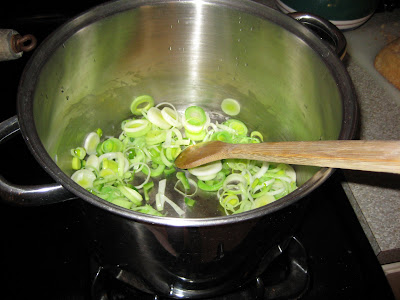
I sauteed the leeks and a couple of cloves of garlic in a tablespoon of olive oil for a few minutes. When they start getting soft and fragrant, I added the other ingredients: the chopped veggies and about a quart of vegetable stock, along with the cans of tomatoes. EXCEPT the cabbage. Save that for the last 15 minutes.
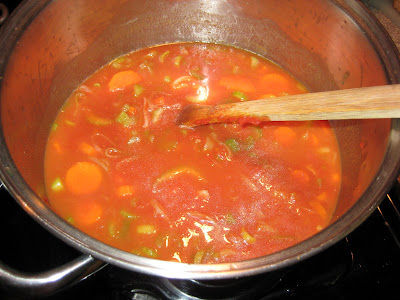
And honestly, that's about all. Let it simmer the whole time you're baking the bread. The longer, the better. Throw in the cabbage for the last fifteen minutes of cooking.
Oh, seasonings? I used my old standby fresh herbs from the garden: thyme, oregano, basil. There was some shady-looking parsley in the fridge, so in it went. And some celery salt and pepper. If you have other favorites, substitute away.
And when it looks like this, it's ready to eat. Unless you have my kids, in which case you're going to need a few ice cubes. Maybe they're Russian?

This one is never exactly the same twice, because the whole point is to clean out the fridge. You know what I'm talking about. The celery that's not quite as crisp as it should be. The cabbage that you kind of forgot about but still has a little life left. The remnants of whatever else might be in there and not quite worthy of the bin.
This time, I started with this:

Things weren't as questionable as they often are. Because the fridge had been cleaned out pretty recently. But if it makes you happy to pretend that the celery is wilted and the cabbage is less than perfect, go ahead. Because it usually is. You see that jar? It contains about 1/2 cup of brown rice. I was sick of looking at that almost-empty container. And those cans of tomatoes are essential if I want my kids to eat this soup. For them, it's not good soup without a tomato base and a healthy dose of cabbage.
I sauteed the leeks and a couple of cloves of garlic in a tablespoon of olive oil for a few minutes. When they start getting soft and fragrant, I added the other ingredients: the chopped veggies and about a quart of vegetable stock, along with the cans of tomatoes. EXCEPT the cabbage. Save that for the last 15 minutes.
And honestly, that's about all. Let it simmer the whole time you're baking the bread. The longer, the better. Throw in the cabbage for the last fifteen minutes of cooking.
Oh, seasonings? I used my old standby fresh herbs from the garden: thyme, oregano, basil. There was some shady-looking parsley in the fridge, so in it went. And some celery salt and pepper. If you have other favorites, substitute away.
And when it looks like this, it's ready to eat. Unless you have my kids, in which case you're going to need a few ice cubes. Maybe they're Russian?

Tuesday, October 23, 2007
Hey, look! I'm back!
The laptop has returned to the land of the living and I just uploaded a zillion pictures. So here we are, just in time for the return of autumn.
Let's bake some bread!
A few assumptions. I have a Kitchenaid mixer and I use it as much as I can. Even though Jamie Oliver says we should make our dough with our hands, I prefer to make less of a mess and get things done. I'm a busy woman. But last winter I baked this bread almost every day because it has a lot fewer ingredients than grocery store bread, and it slices very well. Recently, in an effort to add fiber to my diet, I've been experimenting with oat bran flour, and this bread seems to accept that substitution nicely.
English Muffin Bread
1 cup milk
2 tablespoons sugar
1 teaspoon salt
3 tablespoons butter
1 cup warm water (100-110)
1 tablespoon active dry yeast
2 cups wheat or oat bran flour
3.5 cups unbleached all-purpose or bread flour
cornmeal (about 1/4 cup)
In a small saucepan, warm milk, butter, salt, and sugar until everything is all melty and dissolved. While the milk mixture is cooling (to a little warmer than room temperature), dissolve yeast in warm water in the mixer bowl. After the yeast is dissolved, mix in the milk.
Attach the dough hook to the mixer and begin adding flour.
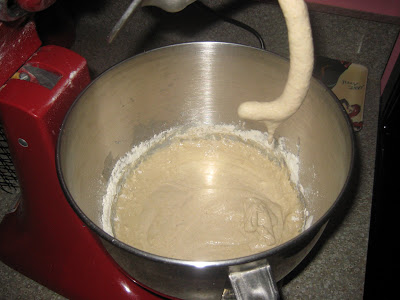
I start with 2 cups of flour, then add 1/2 cup at a time until the dough comes away from the sides of the bowl and forms a nice soft ball.

Leave it in the mixer, kneading, for a couple of minutes. Dough should be soft and manageable. After it's kneaded a few minutes, remove it and put it in a greased bowl. Flip it around in the bowl so it's covered with oil on all sides.
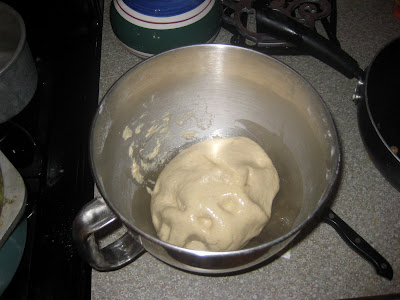
Cover with a tea towel or plastic wrap and put it in a warm, draft-free location (I usually put it in the oven with the light on). Allow it to rise until doubled. This takes about 30-45 minutes most of the time. Sometimes it takes closer to an hour. Depends on how warm the oven is, how warm the water and milk were, and probably a lot of other factors, like the relative humidity and the barometric pressure. But it will eventually double (if it doesn't, go ahead and throw it away....your yeast was dead....probably because it was ancient or your water was too hot and killed it). Sprinkle cornmeal on your countertop (please, make sure the countertop is clean). Grease a loaf pan (or two).
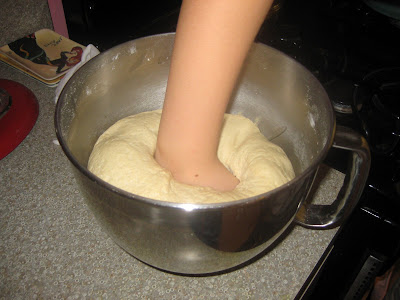
Punch down the dough, then form it into a loaf (or two of them). Roll in the cornmeal.

Cover, again, place in that same draft-free location, and let rise again until doubled (might take a little longer this time...allow about an hour).
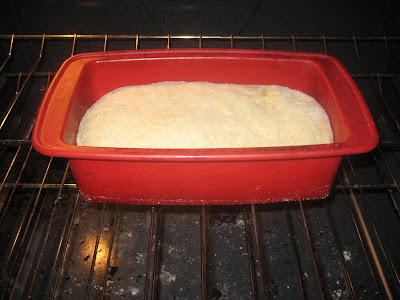
It's doubled again. Remove the cover, heat the oven to 400 (unless you're using glass pans, then heat to 375) and bake until golden, about 25 minutes.
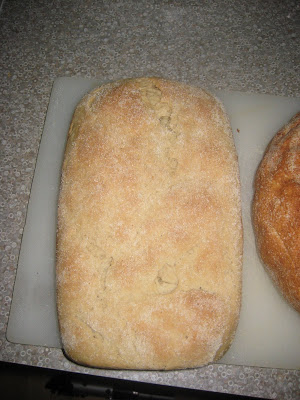
This is really yummy with soup. Or butter. And I'm sure it would be fabulous with bacon.
Let's bake some bread!
A few assumptions. I have a Kitchenaid mixer and I use it as much as I can. Even though Jamie Oliver says we should make our dough with our hands, I prefer to make less of a mess and get things done. I'm a busy woman. But last winter I baked this bread almost every day because it has a lot fewer ingredients than grocery store bread, and it slices very well. Recently, in an effort to add fiber to my diet, I've been experimenting with oat bran flour, and this bread seems to accept that substitution nicely.
English Muffin Bread
1 cup milk
2 tablespoons sugar
1 teaspoon salt
3 tablespoons butter
1 cup warm water (100-110)
1 tablespoon active dry yeast
2 cups wheat or oat bran flour
3.5 cups unbleached all-purpose or bread flour
cornmeal (about 1/4 cup)
In a small saucepan, warm milk, butter, salt, and sugar until everything is all melty and dissolved. While the milk mixture is cooling (to a little warmer than room temperature), dissolve yeast in warm water in the mixer bowl. After the yeast is dissolved, mix in the milk.
Attach the dough hook to the mixer and begin adding flour.
I start with 2 cups of flour, then add 1/2 cup at a time until the dough comes away from the sides of the bowl and forms a nice soft ball.

Leave it in the mixer, kneading, for a couple of minutes. Dough should be soft and manageable. After it's kneaded a few minutes, remove it and put it in a greased bowl. Flip it around in the bowl so it's covered with oil on all sides.
Cover with a tea towel or plastic wrap and put it in a warm, draft-free location (I usually put it in the oven with the light on). Allow it to rise until doubled. This takes about 30-45 minutes most of the time. Sometimes it takes closer to an hour. Depends on how warm the oven is, how warm the water and milk were, and probably a lot of other factors, like the relative humidity and the barometric pressure. But it will eventually double (if it doesn't, go ahead and throw it away....your yeast was dead....probably because it was ancient or your water was too hot and killed it). Sprinkle cornmeal on your countertop (please, make sure the countertop is clean). Grease a loaf pan (or two).
Punch down the dough, then form it into a loaf (or two of them). Roll in the cornmeal.

Cover, again, place in that same draft-free location, and let rise again until doubled (might take a little longer this time...allow about an hour).
It's doubled again. Remove the cover, heat the oven to 400 (unless you're using glass pans, then heat to 375) and bake until golden, about 25 minutes.
This is really yummy with soup. Or butter. And I'm sure it would be fabulous with bacon.
Subscribe to:
Posts (Atom)


